 inbox Me
Temporary Email vs. Permanent Email: Which One Do You Actually Need?
Not every email address should be treated the same way. The mistake most people make is using one address — their real, permanent one — for everything,…
 Not every email address should be treated the same way. The mistake most people make is using one address — their real, permanent one — for everything, from their bank to a random giveaway site. Here's how to think about the split. ## What a permanent email address is for Your permanent address (Gmail, Outlook, a custom domain) should be reserved for things that need long-term continuity: banking, government services, your employer, your phone carrier, and any account where losing access would be a real problem. These accounts benefit from a stable, recoverable address with two-factor authentication and a password manager behind it.
 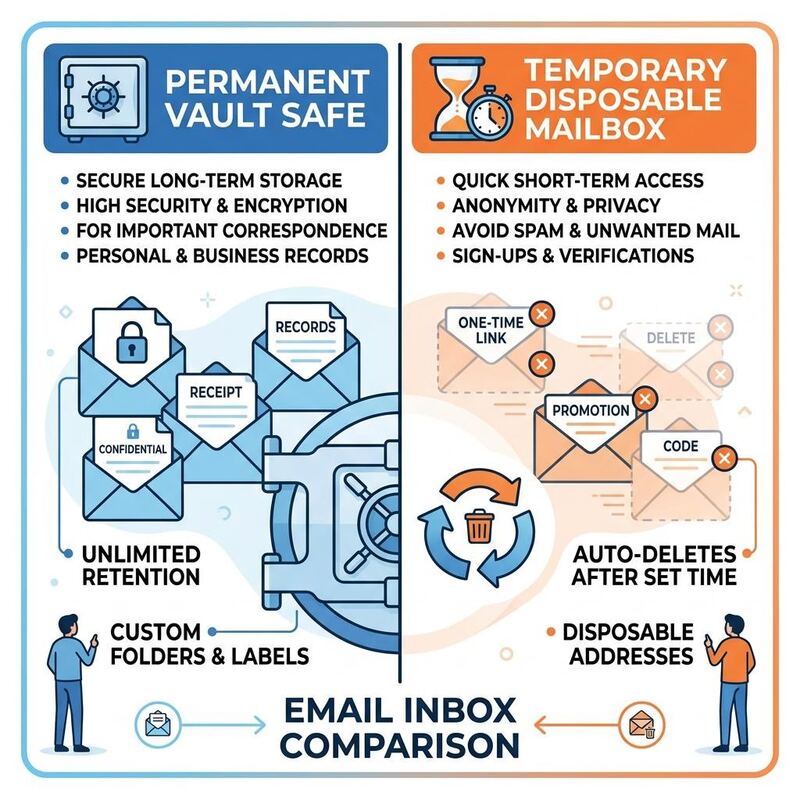 ## What a temporary email address is for A disposable inbox is built for the opposite case: short-lived, low-stakes interactions where you don't want a permanent record. Free trials, gated downloads, forum sign-ups, and one-off verification codes are all a good match — see our full breakdown of smart use cases. ## The real difference is risk tolerance, not "legitimacy" Both types of addresses are legitimate; they're tools for different risk profiles. A permanent email address is an asset you protect and maintain. A temporary email address is a disposable buffer you're comfortable losing. The question to ask before any sign-up isn't "is this allowed?" — it's "would losing this inbox tomorrow actually cost me anything?" If the answer is no, reach for temp mail.
 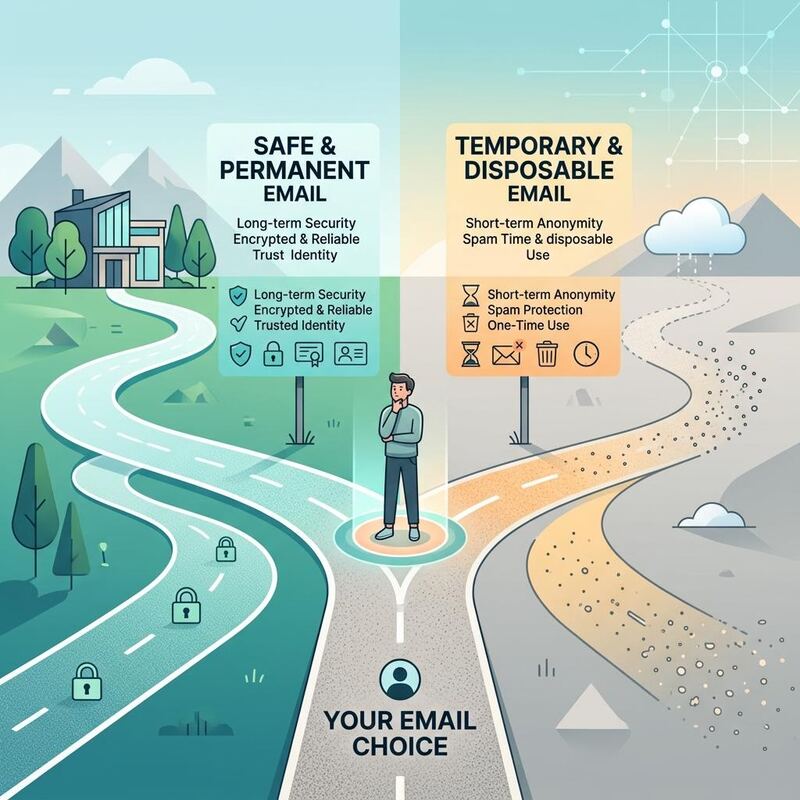 ## A practical rule of thumb If money, identity documents, or long-term account recovery are involved, use your permanent address. Everything else — read our temp mail safety guide for the specific edge cases — is fair game for a free temporary email address.