 inbox Me
Gmail Aliases vs. Temp Mail: What's the Real Difference?
Gmail's "+" trick () and dedicated alias services like Apple's Hide My Email get recommended constantly as spam-fighting tools — but they solve a different…
 Gmail's "+" trick (
[email protected]) and dedicated alias services like Apple's Hide My Email get recommended constantly as spam-fighting tools — but they solve a different problem than a temporary email address does. Here's the real distinction. ## What Gmail "+" aliasing actually does Adding +anything before the @ still delivers straight to your real Gmail inbox. It's genuinely useful for filtering — you can set up a rule that auto-labels or archives mail sent to +shopping. But it does nothing to protect your identity: strip the +shopping back off and you have your exact real address. Any site (or spammer) can do this trivially, and some sign-up forms even reject the + syntax outright. 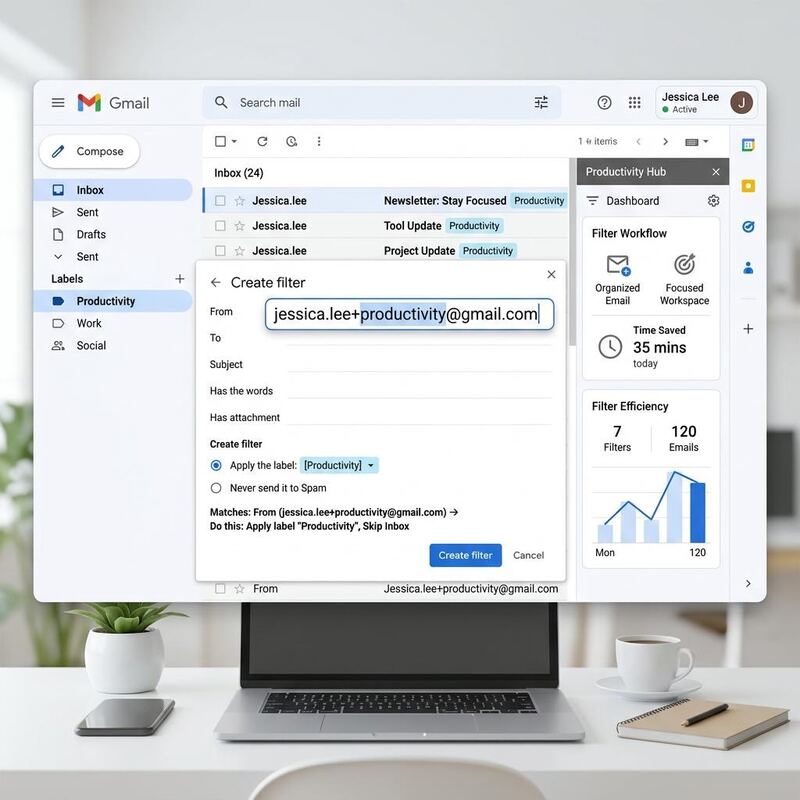 ## What a dedicated alias service does Apple's Hide My Email and similar tools generate a random-looking forwarding address that relays to your real inbox, without exposing your real address to the site you signed up for. This is a genuine privacy improvement over plain aliasing — but the mail still lands in your primary inbox, so if the source starts sending a lot of volume, you're still dealing with it, just relabeled. ## What a temporary email address does differently A disposable inbox isn't a forwarding layer on top of your real account at all — it's a fully separate address with no connection back to you. Nothing forwards anywhere; the inbox itself is temporary and gets discarded. This is the right tool when you don't want a record to exist, not just when you want better filtering.
 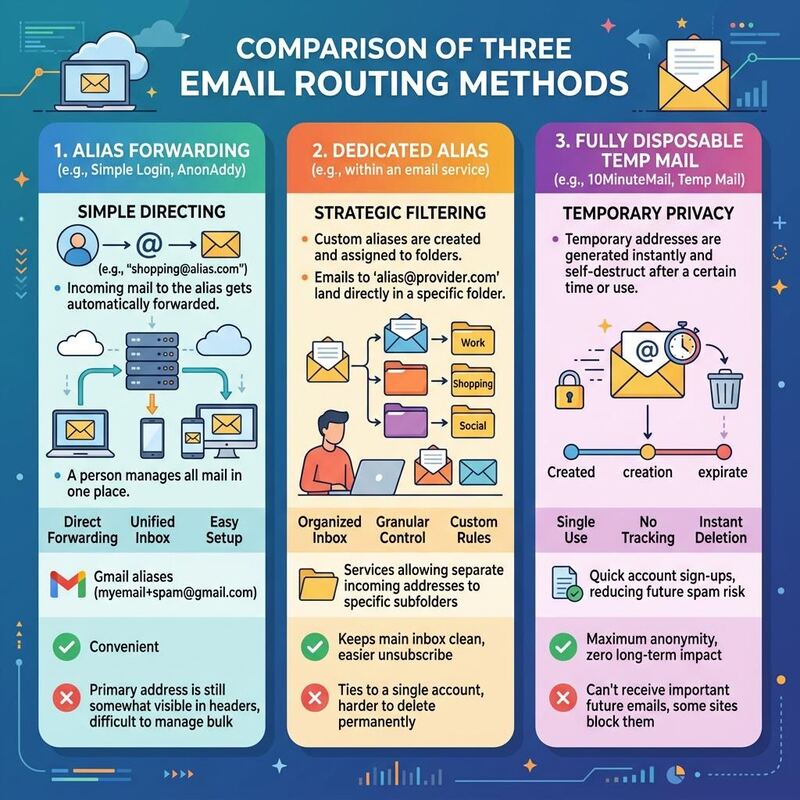 ## Choosing between them - Want better organization of mail you'll still receive long-term? Use Gmail aliasing. - Want privacy from the site you're signing up for, but plan to keep receiving mail from them? Use a dedicated alias service. - Want no lasting connection to your identity at all, for something short-lived? Use temporary email. They're complementary tools, not competitors — pick based on whether you want to keep receiving the mail or not.