 inbox Me
Can You Get in Trouble for Using a Fake Email Address?
This is one of the most common worries people have before trying temp mail for the first time — and the honest answer is: it depends entirely on context,…
 This is one of the most common worries people have before trying temp mail for the first time — and the honest answer is: it depends entirely on context, not on the tool itself. ## The legal picture Using a temporary email address is not illegal. There is no law against generating a disposable inbox to sign up for a newsletter or a free trial. Temp mail services operate openly, are indexed by search engines, and are used by millions of people daily for entirely legitimate reasons — see our guide to common uses.
 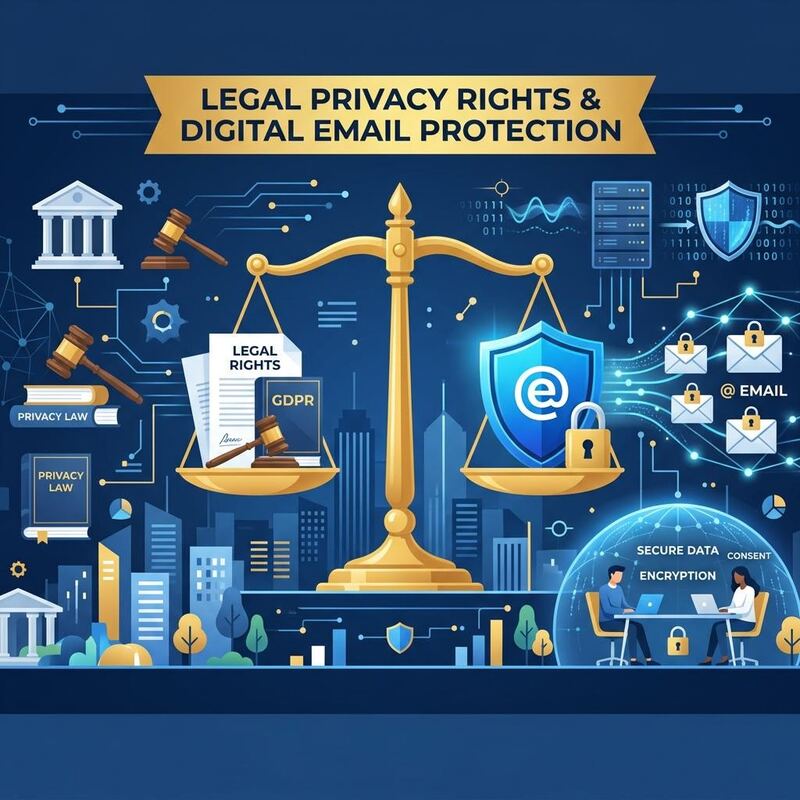 ## Where it gets more complicated The nuance is with individual services' terms of use, not the law. Some platforms explicitly prohibit disposable email domains in their terms — usually to fight fake account creation, review manipulation, or referral-bonus abuse. If you use a temp address on one of these platforms and they detect it, the consequence is typically the account being blocked or the sign-up being rejected outright — a business decision, not a legal one. ## What actually crosses a line Using disposable email to create fake accounts for fraud, to abuse referral programs at scale, to evade a ban, or to submit fake reviews is a terms-of-service violation (and in some fraud cases, potentially more) — but that's true of the behavior, regardless of which email address enables it. The tool is neutral; the intent determines the risk.
  ## The practical takeaway For the overwhelming majority of use cases — free trials, gated downloads, one-off verifications — using a temporary email address carries no legal risk and, at most, a chance the sign-up itself gets rejected by a service that blocks known temp-mail domains. Read a sign-up form's terms if you're unsure, and when in doubt, reserve temp mail for the low-stakes cases outlined in our FAQ.